


The 20-Hour Rule is a principle for learning new skills. No matter what you want to be good at, what you want to do, or how difficult it is, you can do it in 100 times less time than before.
This contradicts the principle of the 10,000-hour rule that we have heard or listened to, that if we want to be good at something, we must learn and practice that thing for at least 10,000 hours. In this case, if we compare it to a period of time, for example, if we have to practice a skill for 4 hours a day, every day, in one year, we will spend 1,460 hours and it will take us at least almost 7 years to become good at that thing.
“To become good at something, you need to practice for more than 10,000 hours… Can we do that?”
Everyone has to feel discouraged, wanting to have a better life, wanting to improve themselves. Many people get discouraged when they encounter principles like the 10,000-hour rule. But we can’t say that we won’t improve ourselves. The important fact that we must understand and accept is that humans are creatures that need to develop themselves all the time. There is a constant need to learn, improve, and change themselves. Especially in this era, because uncertainty really exists.
Learn new things with the 20-hour rule
Josh Kaufman, author of The First 20 Hours: How to Learn Anything…Fast! and The Personal MBA: Master the Art of Business, shared his fascinating story of wanting to learn new things in a TEDxCSU talk.
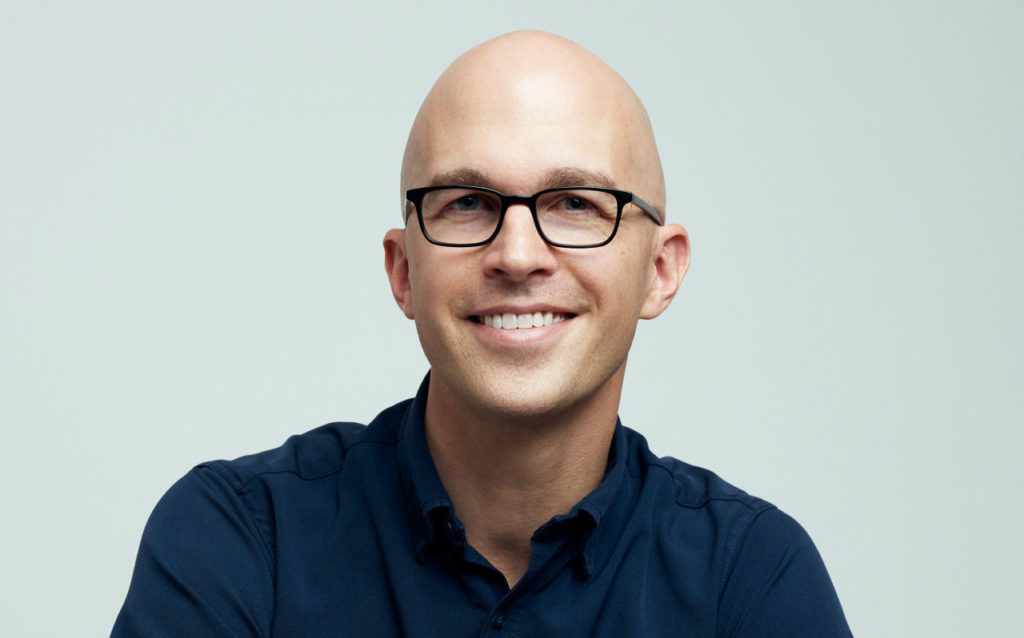
His story began when he had a child. He and his wife worked from home and raised the child. Of course, it was a joy for him to experience something new, raising a child for the first time in his life. But in that joy, he found that he had no free time to do anything else.
“Because curiosity is a part of being human.”
Who says curiosity is a bad thing? Whenever we have a good curiosity, we tend to want to learn new things. In Josh ’s case , it started with a small question: Why does raising a child leave him with so much free time?
Even though people around us keep saying, “That’s the way it is,” or “It’s normal,” or “It’s a normal part of raising a child,” at that time, if Josh or even us really thought that way, because the situation, emotions, feelings, and opinions from other people might lead us to believe that, without wanting to think about finding the answer.
But if we are very curious, it will make us find out why? Or find a solution? Or find a way to learn new things, which may contradict those old sayings or beliefs.
“Start with curiosity, immerse yourself in it, and you will find something unexpectedly good.”
Josh was obsessed with learning new things in different problems. He started to wonder how long it takes for a person to learn new things and do new things until they become experts. Of course, he went to the library to find books, research, or information that could help him answer the question, but they all gave the same answer:
“10,000 hours or the equivalent of 5 years of full-time work.”
The data doesn’t seem fair. Most research and books say that it takes at least 10,000 hours to excel at something, be good at it, or be the leader in it. But in Josh ‘s situation , he doesn’t have that much time to learn because he has to raise his children and work. Where would he find that much time?
“We always feel that time flies when we spend it doing what we love.”
After Josh obsessed over the 10,000-hour rule and trying to find a way to reduce the amount of time he spent, he discovered that people tend to ignore time when they are doing what they want to do. For example, children tend to focus on the clock in class because they don’t like it. But when they are playing with their friends on the playground, they feel like they have only gone down the slide a few times before it gets dark. Well, here’s the answer.
“10,000 hours is not true.”
According to Josh ‘s study , when we start learning something new that interests us, we do it well and spend a long time with it without feeling any pain at all. We will be engrossed in it willingly. But in things that we are forced to do well, of course, in the beginning we will spend a lot of time with it because we are “in love”. But after finding out that it is not what we want, the time we spend with it will be less and less, to the point of giving up in the end.
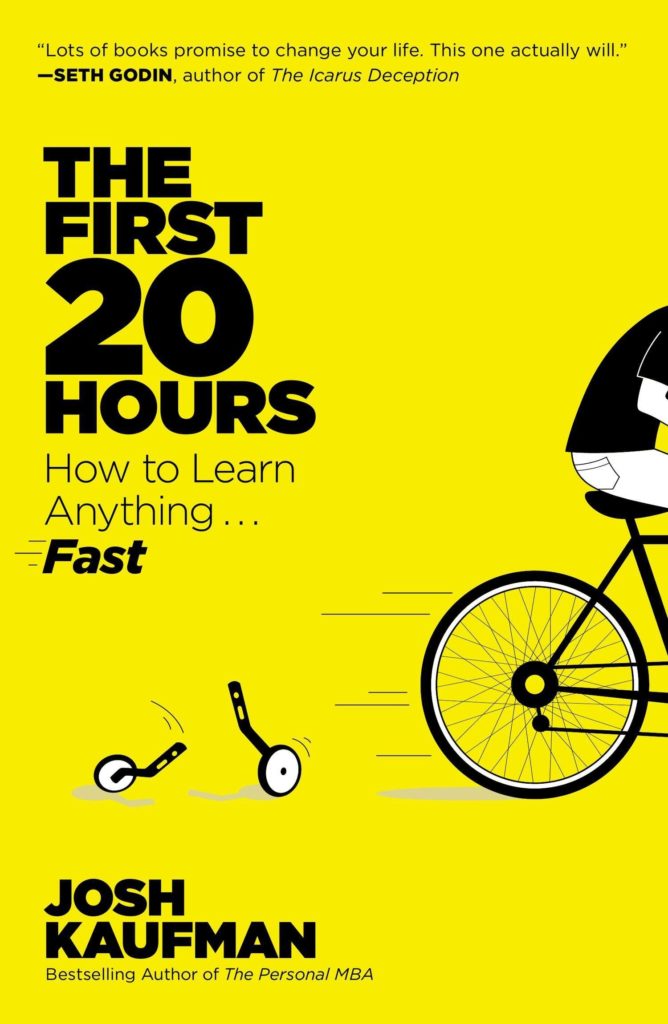
Luckily for us, Josh didn’t have enough time to learn 10,000 hours, so he studied and learned new things in 20 hours or 45 minutes a day within 1 month. Of course, he did it successfully. It became the 20-hour rule , which consists of 4 steps as follows:
1. Break down the new things we want to learn into small pieces and examine their parts carefully.
When we start to get interested in something or want to do something we are interested in well, try to break it down into small components, into steps, and start learning each part. For example, when we want to bake bread, we have to start by making dough, letting the dough rise, kneading the dough, shaping it into a ball, and putting it in the oven, etc.
Or if it is a skill related to work, such as English, we have to divide learning English into small topics. For example, if you want to be good at grammar, divide it into small topics, learn a little at a time, continuously until you reach your goal.
2. Learn enough to be able to correct mistakes .
Josh says that the belief is that the more we read, the more we will learn and the less we will make mistakes. But in reality, it is not. It takes more time and he finds that he still makes mistakes.
“When we fail, we just try again, do it a little differently.”
Therefore, in this second step, he advises that if you want to be good at something, you need to define the scope of your research. For example, like in the example above, if you want to bake bread, you will read only 5 books on baking, watch only 3 video tutorials, and then just do it. Don’t be afraid of making mistakes. It’s not strange that you make mistakes, because at least you’ll eventually learn how this method makes bread.
Or if you want to be good at grammar, find 3-4 grammar books that you can quickly read and understand, and watch 3-4 grammar teaching clips. Then try to apply them. Trust me, the admin tried this method and it really works. English is easy.
3. Break down the walls and obstacles to our learning.
The Internet, television, telephones, or even our own distractions, throw these things away because they are obstacles that will prevent us from learning what we want.
“Match what we love to do with what we want to do.”
Josh cites a TEDxPenn Talk by behavioral scientist Katherine Milkman , who introduced a technique called “distraction binding.” It’s a technique that allows you to stay engaged in something you want to learn for longer, like listening to your favorite podcast while baking bread, or helping a friend have coffee and chat after a yoga class.
Or, in terms of practicing English, we can also use this technique by learning English from watching movies or listening to songs (with reading the lyrics).
4. Practice at least 20 hours.
The hardest thing about practicing is that it is normal for us to experience failure when we first start. It is like when we take our first step and fall. We may accidentally think that we are not capable and feel hurt by those thoughts until we stop doing it.
But in this 4th step, we have to start doing the opposite. After we fail, we just admit that we failed and continue doing it for at least 20 hours. After that, we will be surprised by the results we get.
“Step 4 is what confirms that your 20-hour investment will definitely yield the most worthwhile results.”
The same goes for English practice. If we are determined to continue practicing for at least 20 hours, the results will be a clear improvement in our English proficiency level.
Josh Kaufman’s 20-Hour Rule with Ukulele
Josh decided to start learning something new in a way he had never been interested in before. He saw Jake Shimabukuro play the ukulele amazingly in a TED talk. It ignited him immediately after watching it. He started getting his own ukulele, finding chords, lyrics, learning how to play through videos on the internet and decided that it would be his next big thing to learn.
“We just know 4-5 chords and can play any pop song.”
What he learned from studying the ukulele was that he was definitely going to be able to play pop songs, and he figured that four or five chords wouldn’t be too difficult. In his TEDxCSU talk , he played a medley of over a dozen pop songs on the ukulele, and of course, he only practiced it for about 20 hours.
Conclusion
There is nothing that is truly beyond the capabilities of human beings.
Today, something new, whether it is something we have never experienced before, may be just a desire, a need, a dream, or maybe a fear. If we don’t try, we will never know whether we can do it or not.
People are often afraid of failure, afraid of feeling stupid when trying something they’ve never done before. That feeling is not a good feeling, so it’s a big obstacle that many people can’t overcome.
So when we start doing something, we just have to accept that this is the first time, this is a mistake, and then find a new way. The new way we find may lead us to a result that surprises us.
“The real obstacle is not stupidity or intelligence, but feelings and emotions.”
หนังสืออื่นๆ ที่น่าสนใจ สามารถอ่านเพิ่มเติมได้ที่ :
ATOMIC HABITS – เปลี่ยนแปลงนิสัยของเราวันละนิด ชีวิตดีกว่าเดิมหลายเท่าตัว
