

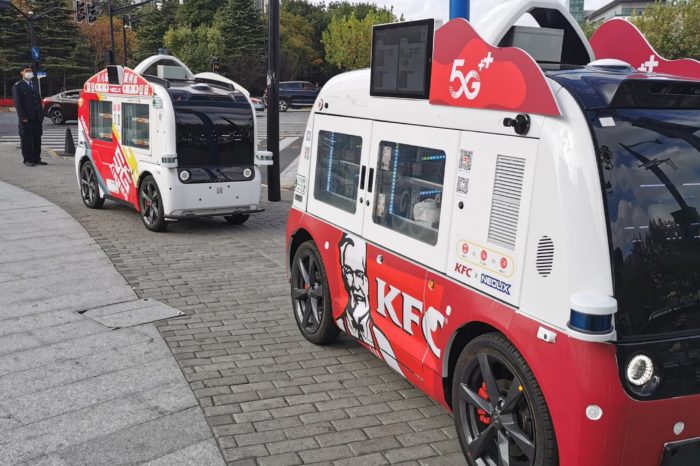
5G Food Truck Delivery is the application of communication technology in conjunction with vehicles to solve problems in businesses that still have to face COVID.
Since the impact of COVID-19 shows no signs of ending easily, just this year alone, many new business ideas or new careers have emerged (including many businesses and careers that have disappeared as well).
In particular, food and beverage companies have learned many lessons during the severe Covid outbreak. Originally, many companies did not have delivery services. If they could not adapt in time, they had to close down. However, if they were able to react quickly, they had to turn to this channel, which has led to the food delivery business growing very rapidly in the past.
As a result, the Food Delivery business, including the number of Riders (people who ride motorcycles to deliver food), has increased several times over. One reason is that the demand for ordering food to eat at home has increased significantly during COVID, and coupled with the fact that many people who have been affected by COVID and have lost their jobs have jumped into this profession in large numbers.
The first quarter of 2020 was almost the time when Riders made a lot of money. But after the lockdown was lifted, restaurants were able to reopen as usual. The amount of online orders did not drop drastically. They were still able to continue.
Because the value of this business is attractive, from the original players, the Delivery Platform group such as Grab Food, Line Man, Foodpanda and GET (now renamed Gojek) and the new ones, Robinhood from SCB and Eatable from KBANK.
Why are banks entering the food delivery market?
He said he wanted to help entrepreneurs, not for profit. But believe me, the stakes in this business game are huge. It’s not just the market value that’s huge, but also the user data that’s abundant. And this is where it’s needed.
According to the latest Statista data
- Revenue: It is estimated that the total revenue of Online Food Delivery this year, 2020, is US$275m, an increase of 38.2% from the previous year, and is expected to grow further to US$455m in 2024.
- Number of users: The number of users in the Online Food Delivery system in 2020 is 10 million people, an increase of 32.3% from the previous year.
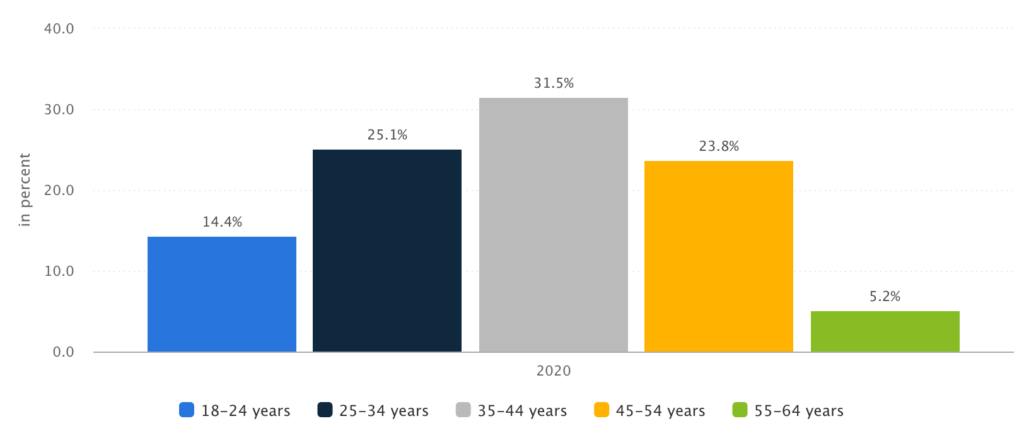
Because this business is growing very fast, the number of customers is up to 10 million people who use the service. If anyone gets this customer database, there will be many more opportunities for the business. Whoever has more customer data in their hands, they have more opportunities. So after 2024, we will have to wait and see if the Food Delivery business will continue to grow or how it will end?
What if there is another severe outbreak of COVID?
There is definitely a high chance that this will happen if the food business does not adapt or prepare in advance. If another big round comes, they may have to fold up and close down. They do not have to wait for the problem to occur before finding a solution. They can start by disrupting themselves first.
In China, KFC takes food delivery to the next level.
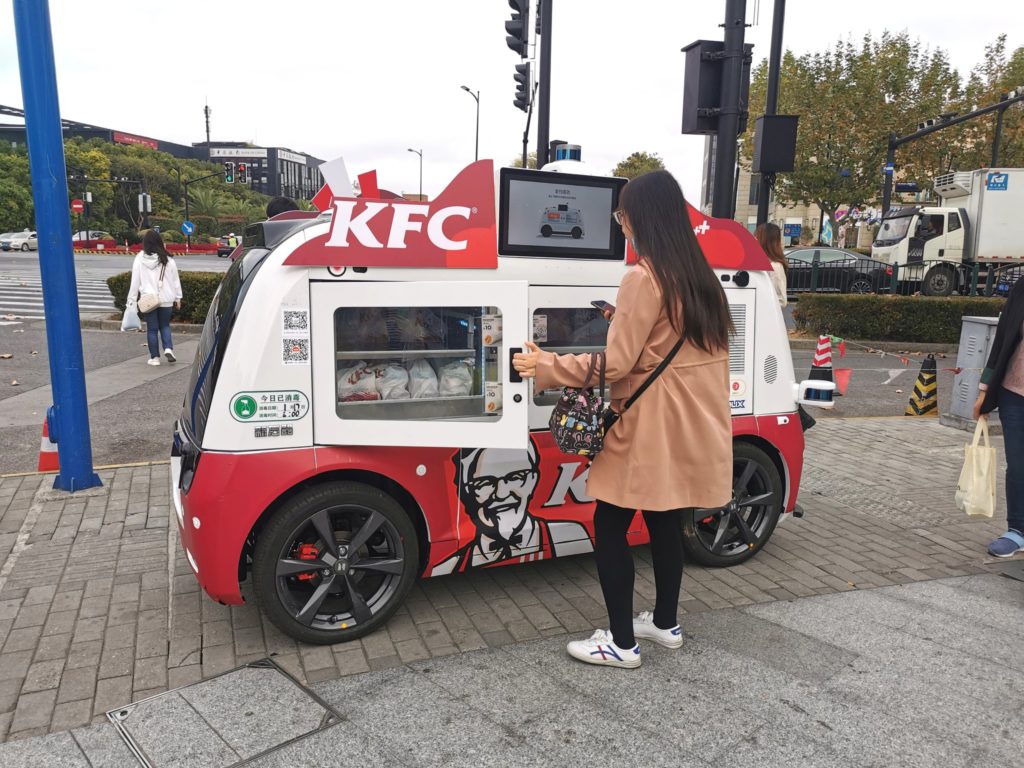
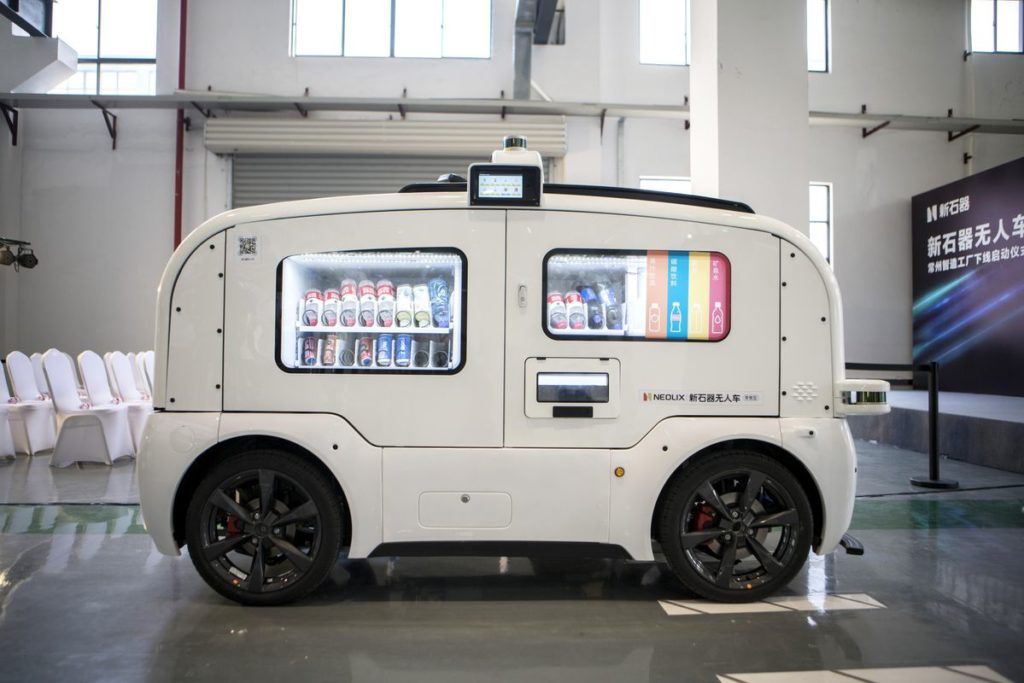
KFC uses 5G Unmanned Vehicles (driverless vehicles) to deliver food to reduce the risk of contracting COVID (No human interaction). Customers can order food themselves through an automatic kiosk, press to order food through the Touchscreen and can pay via QR Code. After completing the order, the 5G Unmanned Vehicles will come to the meeting point, which is now open for service at subway stations in Shanghai.
5G Unmanned Vehicles are developed and manufactured by Neolix , a company that produces Unmanned Vehicles for many industries in China, including retail, food services, and security. The company is also developing a “Restaurant on Wheels” project in collaboration with Pizza Hut in China.
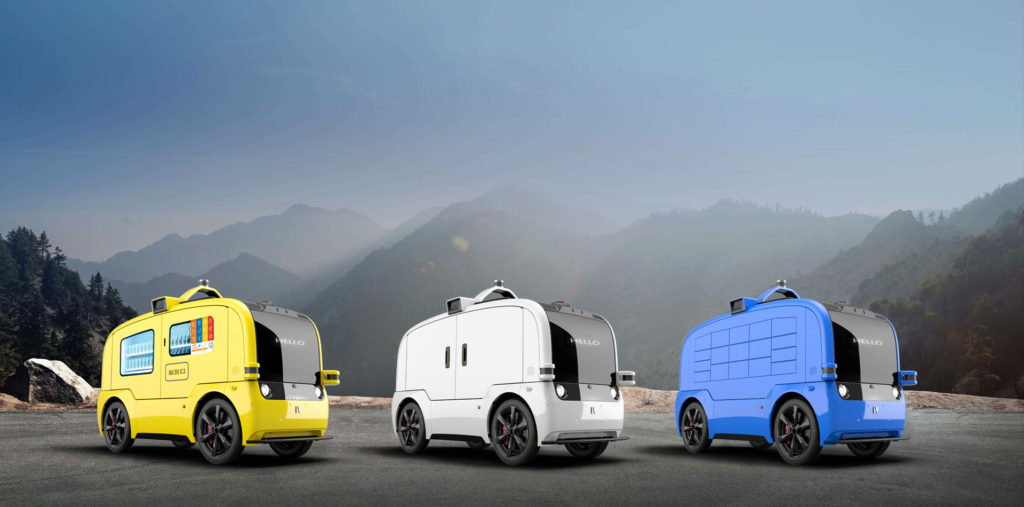
For Neolix’s 5G Unmanned Vehicles, it is a Level 4 type, meaning it can drive autonomously, avoid obstacles, with sensors around the car and specify coordinates, or the driver can control it via 5G. In terms of features, it can run about 100 km on a single charge and can reach a top speed of 50 km/h during use. The battery can be changed without the need for tools, which can be done within no more than 30 seconds.
Why KFC needs to try 5G Unmanned Vehicles?
The uncertainty of business is real. We can’t wait until COVID is over. Or if it is over, how do we know that it won’t happen again? The risks that occur to businesses are something that we have to find measures to deal with. For now, KFC has chosen this path.
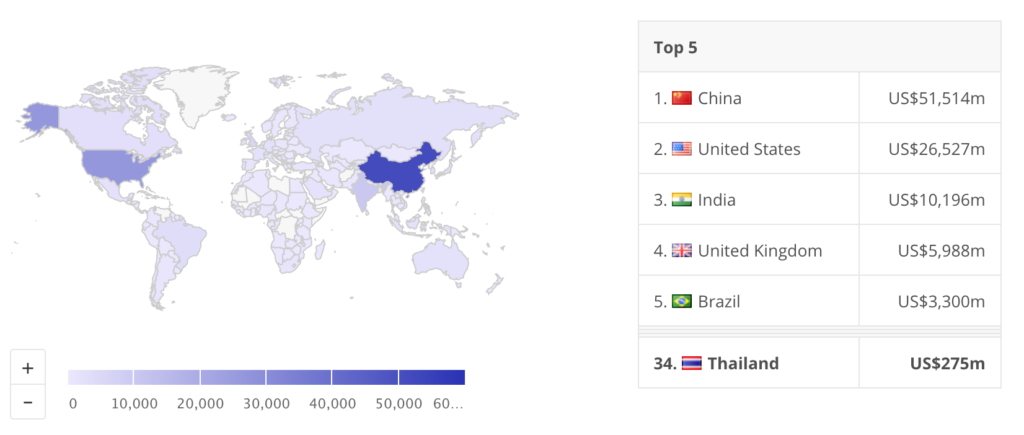
Another thing that is equally important is the income and market value of Online Food Delivery. The Chinese market is the largest in the world, ranked number 1, which is almost twice as large as the United States. Therefore, if KFC does nothing today, it may miss an opportunity or lose an opportunity in the near future. Our country is ranked 34th in the world.
Back in our country, Thailand, we also have 5G Unmanned Vehicles. Huawei also has this kind of vehicle and has collaborated with the National Broadcasting and Telecommunications Commission (NBTC) to create a driverless transport vehicle project in collaboration with Siriraj Hospital.
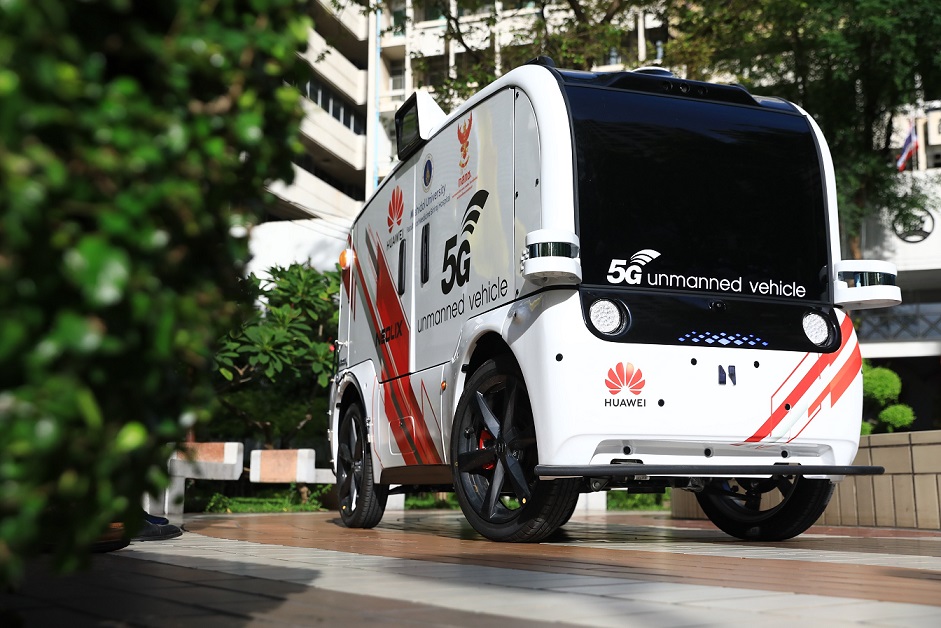
This 5G driverless car will be used to transport medicine and necessary medical materials within the hospital area. Now that the COVID situation in our country has begun to improve, we do not know what the results of using Huawei’s 5G Unmanned Vehicles will be. How much will they support medical activities? We will have to wait and see.
5G Unmanned Vehicles…Game Changer or Disruptor?
The limitation of 5G Food Truck Delivery or 5G Unmanned Vehicles at Level 4 at this time is that they can only operate in specified areas because the law currently does not allow Unmanned Vehicles to run on the road. We therefore see such cases as the recent KFC case in China or even in our country where they can only be used in hospitals.
If one day technology arrives and the law allows it, what will happen?
5G Unmanned Vehicles at Level 5 is Full Driving Automation. It won’t be long before we wait. And if it really comes, many businesses will definitely change or die.
Food Delivery Platform business may not need to use people or riders at all. Suitable area, good road, strong 5G (or maybe 6G) signal, can use 5G Food Truck Delivery instead.
People in this profession will be replaced by Unmanned Vehicles, or Fast Food companies themselves may be able to more easily do their own deliveries through Unmanned Vehicles Level 5.
Both Food Delivery Platforms and Riders may face problems in the near future.
The conclusion of this story
The wave of disruption may come faster and stronger than expected. Whoever changes first always has a better chance.
Therefore, the ability to learn and adapt quickly is very important. Those who are slow or afraid of change will eventually be forced to change.
Source:
https://www.synopsys.com/automotive/autonomous-driving-levels.html
