

Learning is not limited to the classroom because we can learn from what we like, whether it is from experience, doing, or other things.
As is the case with our current famous person, he believes that “learning is not limited to the classroom.”
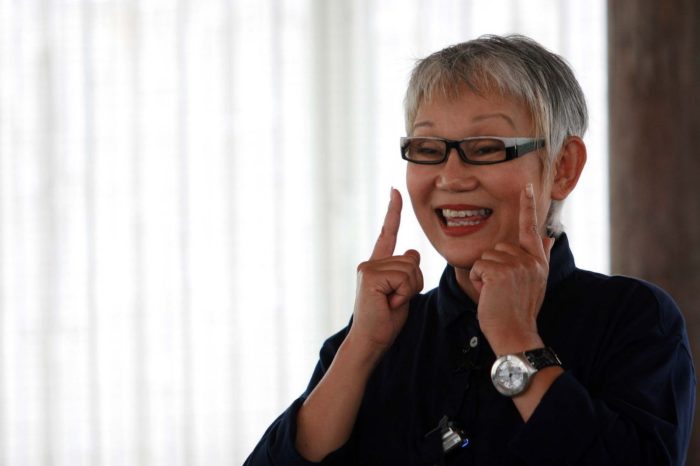
Kru Lek – Phatrawadi Meechuthan, actor, director and founder of Phatrawadi School, Hua Hin, an alternative school that uses performing arts as a process for creating learning alongside academic learning.
Kru Lek told us that most of her learning is through experience, and drama is an important science that allows Kru Lek to know how to connect with the outside world and other people, making learning exciting because we learn from things we like.
A world of learning outside the classroom
Kru Lek told us that during her childhood, “Kru Lek barely learned in the classroom and could not even remember what she learned in the classroom.” This issue is a bit ironic because no matter how many eras pass, there are still many people who do not like learning in the classroom.
“We can learn a lot from life and from real work.”
In the past, Kru Lek was a practical child, gaining all the experiences from studying in leading schools in the country, including traveling to study abroad in both England and the United States. In addition, Kru Lek was a person who had clear interests since childhood, so she chose to focus on learning according to her interests all along.
“People aren’t stupid. Some people just don’t like doing things, so they don’t do them.”
In some parts of her life, Kru Lek talked about her learning methods when she was a student, that there were some activities or tasks that Kru Lek did not like, such as the teacher assigned homework to write about my house. Kru Lek chose to submit a blank paper because the topic was not interesting to write about, causing her to fail the essay subject. But that does not mean that we are stupid about that subject. We just feel that it is not interesting, that’s all.
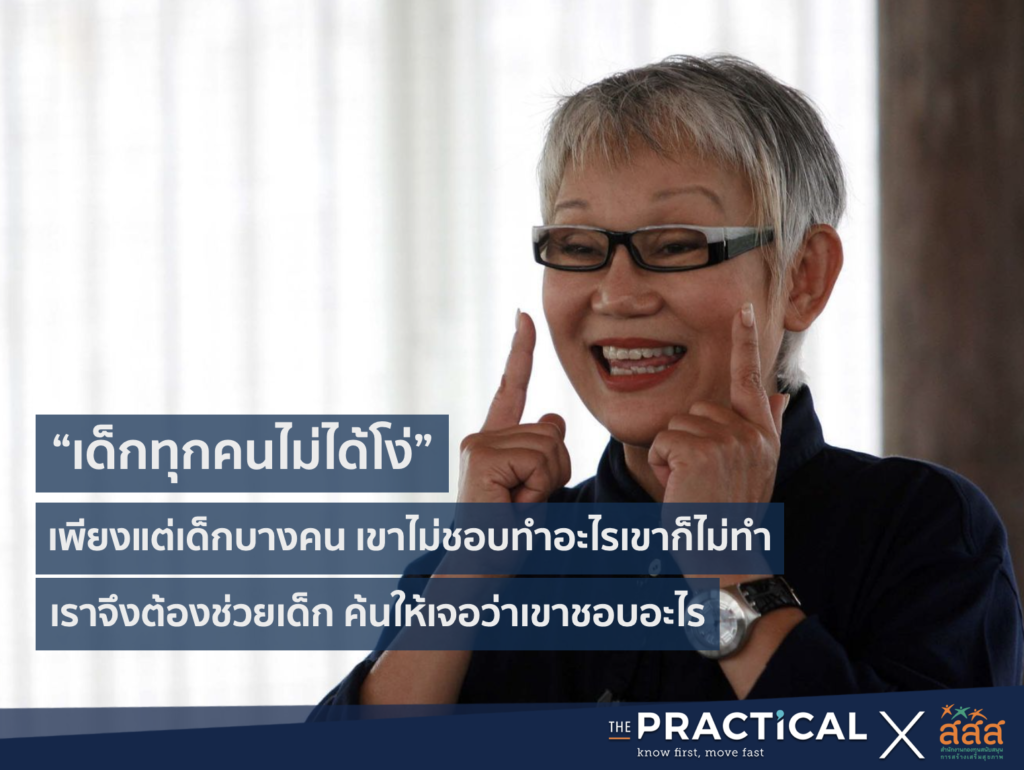
After Kru Lek changed her role to become a teacher, Kru Lek believes that “every child is not stupid. Children just have to find out what they like. If they can’t find it, the teacher will help. In fact, we have to help each other because adults will see the potential of children from their conversations. It will reflect from a single word what they want to do. Therefore, the teacher’s duty is to encourage them to think comprehensively.” This is what a good teacher should do and should help children.
Learn creatively
Almost all of Kru Lek’s practical learning comes from her interest in the arts. Kru Lek told us that when she was studying at Rajini School, her favorite activities were acting in dramas, dancing, singing traditional Thai songs, and playing Thai music. And when she went to study high school in England, these interests were fully supported by her.
Kru Lek told us that he got to know about literature from performing plays. At Rajini School, we would perform plays, dance plays, sing Thai traditional songs, and play Thai music. And when he went to study at a high school in England, they had a curriculum that used liberal arts to make children interested in going to school. It was a learning that used culture, literature, and language to lead. We got to know about various English literature through performing plays because the school had plays all year round. In addition, we also learned about working with others, which is equally important.
Kru Lek said that everyone in the school will work together as a set designer, costume designer, and director, according to their expertise. But there is one rule there: whatever you do, do it without spending a lot. For example, to make a set, use chairs or tables in the classroom. Do not cut or destroy them. After using them, you must return them to their original condition. Do not waste them. It teaches us to be frugal and work. Students will look around to see what their friends can do. In England, they teach children to be creative and do it themselves with what they have. I still use that to this day. When I work, it is still the same.
The learning system that is instilled in the family
Kru Lek said that her most important teacher was her mother – Khunying Supattra Singhalaka, who pushed her to learn many things since she was a child. Kru Lek said that her mother was a businesswoman who loved singing and reading books.
My mother said that reading books to her made her knowledgeable and broad-minded. I applied that as well. I used to not like reading books, but I would read them out loud and add some drama to them because my mother said that reading books made me smart and because my mother was smart, she was also broad-minded. Smart people are broad-minded because they know a lot, but narrow-minded people are afraid. If we have knowledge, we won’t be afraid,” Kru Lek talked about the people who inspired her.
Kru Lek told us that “Because my mother is a broad-minded person, she encouraged me and I studied everything I wanted to study. She told me to be good at it and really learn it, which I always got an A. But if I studied, I would get an average exam. So I think that if we study something we like, we want to go to school, we want to listen, we want to practice, we want to do it, we will do well because we will not give up.”
Learning how to socialize is another thing that Kru Lek got from her mother. Because Khunying Supattra is a businesswoman, attending social events is like another kind of work. At first, we didn’t really understand it. When we grew up, we realized that sometimes we don’t really like going, but we have to go,” Kru Lek said about attending social events.
“Because meeting people will make us more widely known. My mother will teach us about social etiquette and different ways of speaking. When I went to study in America, the school also taught us about social etiquette, how to hold wine glasses, how to talk, how to eat appetizers, how to set the table. These etiquettes that we learned, practiced, and learned more about from socializing are very useful.”
Kru Lek tells the details of the training and what he has learned from the training in social etiquette in an interesting way. He found that these things have results beyond just going to work, but can also be applied in life, such as:
When it comes to manners, people often judge us on how we dress, how we walk, how proud we are of ourselves, and whether we can greet or shake hands well in different cultures. Because shaking hands means giving a small, gentle squeeze to let them know that it is from the heart. These things need to be practiced. Some people who just reach out their hand to shake seem very cold. Some people squeeze until it hurts. The correct handshake comes from the heart and requires eye contact, etc.
Teacher Lek told us that “Learning will make our minds better. When we do something, we will be more gentle. When we shout and scold people, we will hear our own voices because we have been trained to listen. When we hear our own voices that are not pleasant, we will stop. That is why we said that to be good, we must be knowledgeable. We tell them to be good children, sit properly, or speak politely. It is not possible. You have to give them techniques on how to speak politely. Train their voices, train their movements. Then the children will learn by themselves.” Teacher Lek gave techniques for learning through self-awareness.
In addition, learning from looking at details is another important thing. This learning caused a change in Kru Lek’s entire thought process. It was because Kru Lek had the opportunity to go to Vipassana in Chiang Mai Province at the invitation of a friend. This made Kru Lek find that “sitting in Vipassana meditation that time made me start to learn to be still, to be with myself, to start to see small details that I had never seen before.”
Teacher Lek said that meditating is a way to cleanse the mind of impurities, making it clear and bright in order to prepare it for learning new things.
“In the past, there were many things that we learned but we could not see them. Until one day our minds were empty and we were trained to see the details through meditation. Meditation is a way to cleanse the mind of the murky thoughts, thinking about this and that, thinking about small things. Then we re-learn, which means we erase the old and learn new things. When we learn new things, we will get the real thing. But the important thing is that we must have a good teacher.”
It made “from someone who thought nothing was important except for their own work to someone who thought everyone in the world was important, and we would do everything within our intellectual capacity. That’s when my work started to improve, and that’s when my life became better.”
Conclusion
“Learning is not limited to the classroom. We can learn from other sources. And importantly, a good learning system needs to be instilled and built from childhood. Family and teachers play a very important role in this matter.”
The story of Kru Lek – Phatrawadi Meechuthan shows that no one is stupid. It’s just that they may not be interested in the things that we or other people in society are interested in. And when it comes to learning, each person’s learning style may have different methods.
Let’s say that we ourselves have to come back and find the answers for ourselves again. What kind of learning do we like? What are the topics? And how can we learn those things and apply them to our lives or work? Maybe we will find the right path for ourselves.
The story references an interview with Kru Lek – Phatrawadi Meechuthan.
From the Transformative Learning Project
Supported by the Health Promotion Foundation (ThaiHealth)
For more articles about the Transformative Learning Project, please visit:
Phi Nick – Wichian RitpaisanPositive thinking is the key to every mission in life, and every problem is an opportunity.
Teacher Ice – Damkeng Mungthanya A good mindset can help us overcome various limitations in life.
Phi Tor – Thanachai Sonsriwichai Life is about asking questions to make us dare to challenge ourselves, to dare to leave our old spots.
